The most romantic palace in Transcarpathia
Beautiful with its romantic architecture, the former residence of the Counts of Schönborn, and now the Karpaty sanatorium, attracts thousands of tourists. And this is natural, because Beregvar Castle, as it is sometimes called, is considered one of the most beautiful monuments of Transcarpathia.
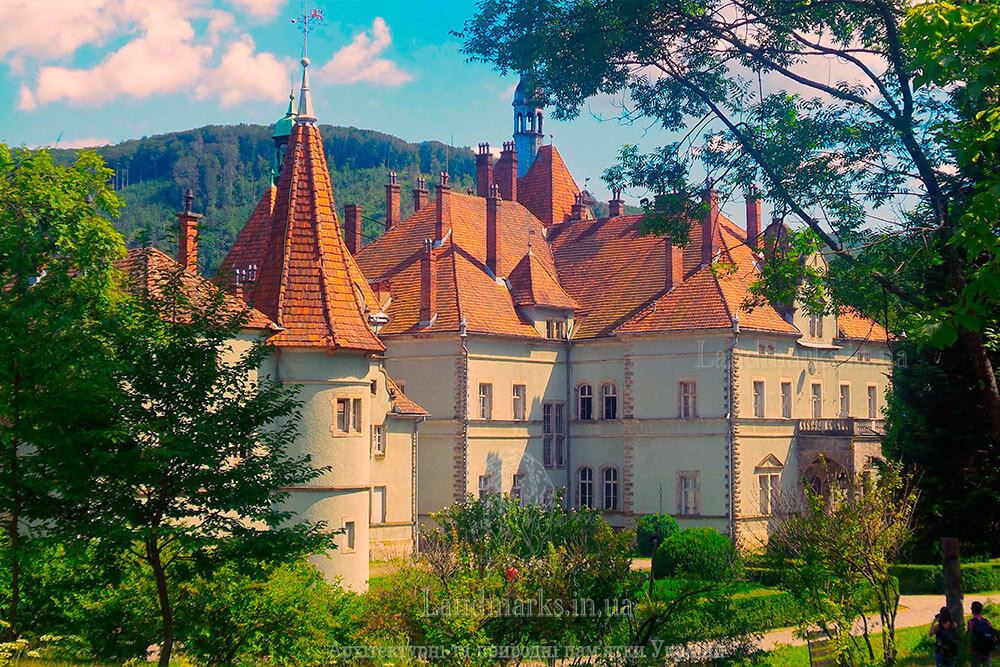
In a wonderfully picturesque place at the end of the 19th century, namely, in 1890-1895, Count Erwin Friedrich Schönborn-Buchheim built a family residence in the form of a hunting lodge in the Art Nouveau style. This palace was built in a neo-romantic style using Romanesque and Gothic motifs. Very often in various sources it is mentioned that the architect was a certain Z. Gresserson. For some reason, this surname is only associated with the Schönborn palace, and it is difficult to find his other works (at least, I have not found any more). So, the project of this architectural gem was probably carried out by the architect Otto Hieser. The architecture of the palace in Transcarpathia echoes his other works. For example, the converted castle-palace in Baltavar. Let's compare.
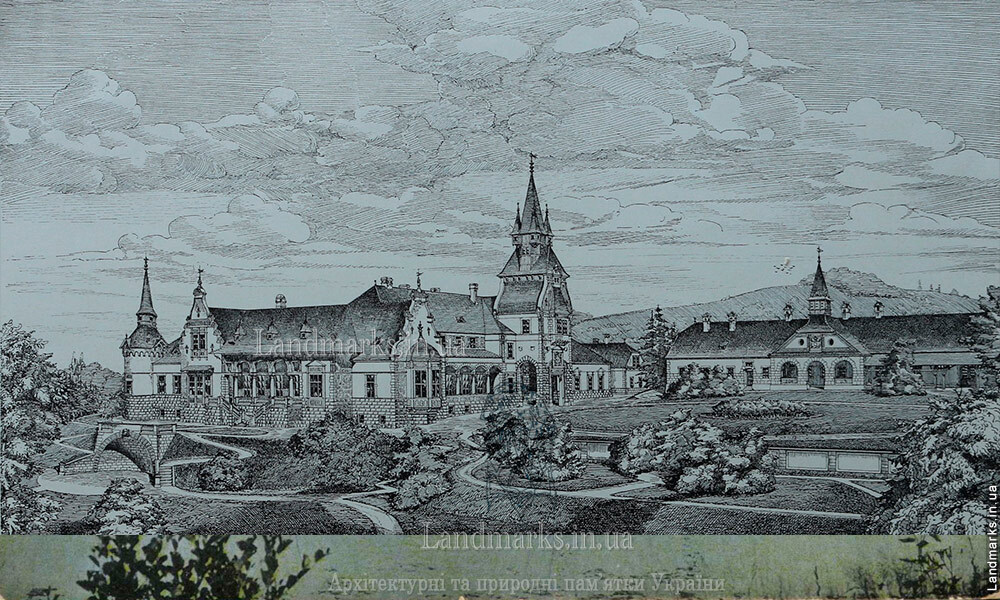
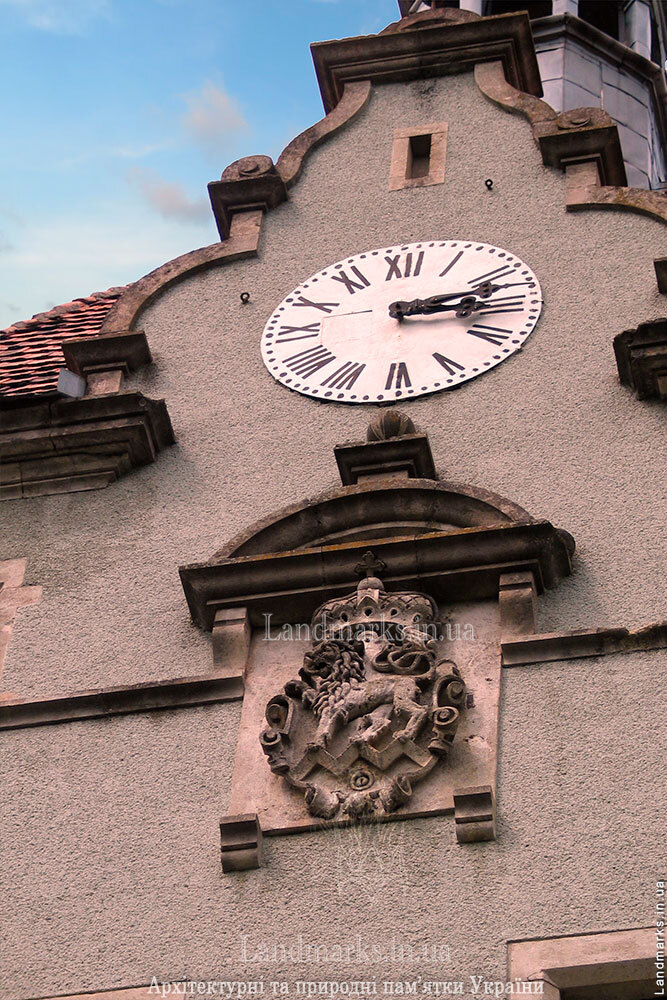
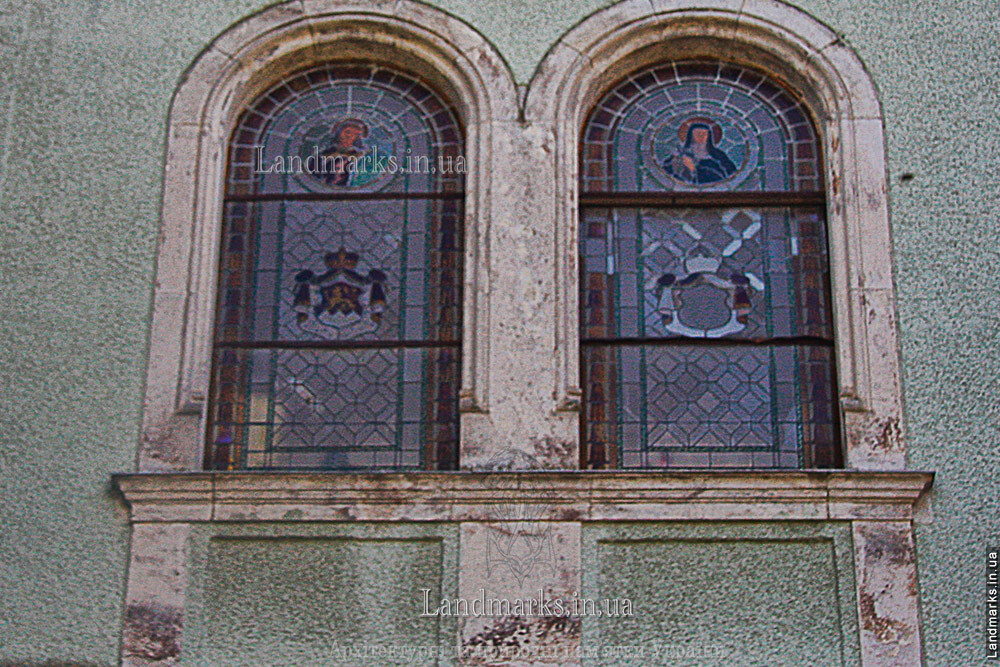
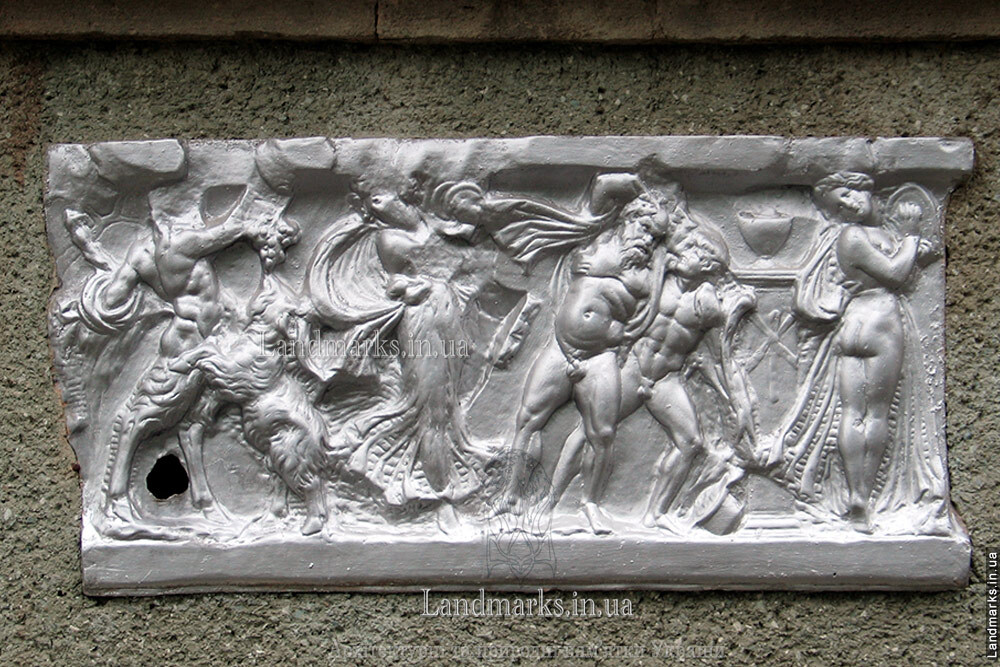
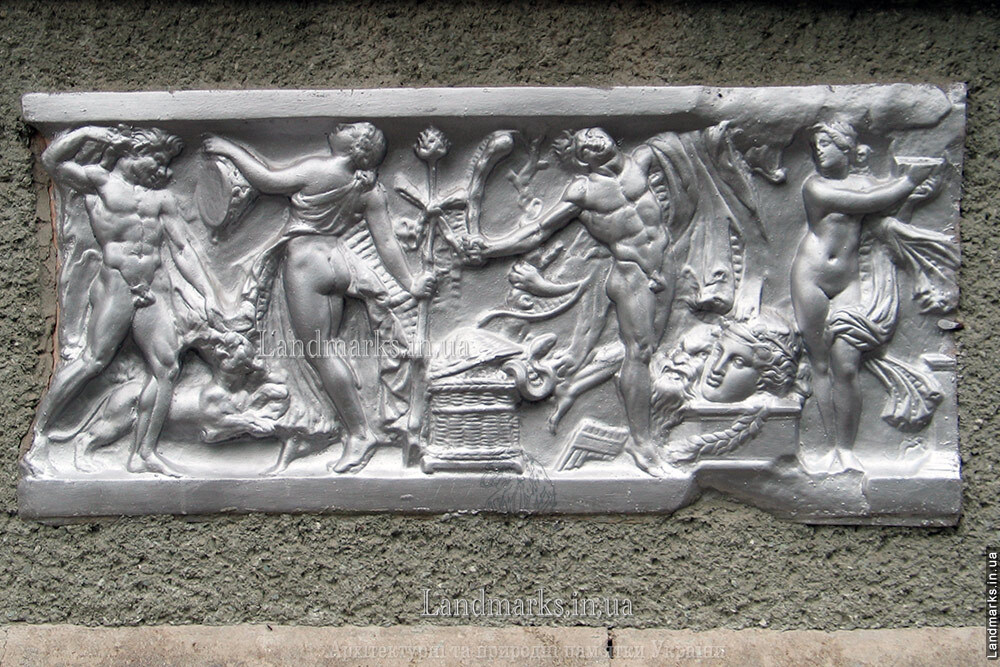
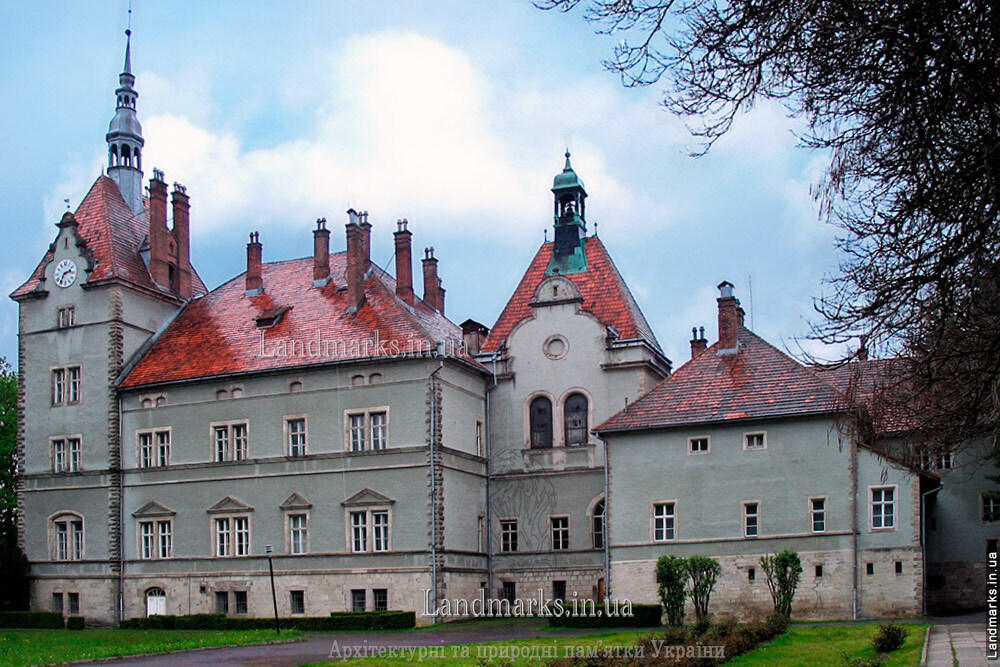
Berehvar Castle in Transcarpathia is smaller in size, but no less attractive. The exterior of the building is decorated with bas-reliefs and stained-glass windows, and there are weathercocks on the towers, one of which is made in the form of the family coat of arms. A clock with chimes adorns the wall of one of the towers. Below it is a cartouche with the Schönborn family coat of arms. The family coat of arms is represented as a lion, with a crown and a cross above its head - a sign of high church rank. Indeed, Lothar Schönborn was Bishop of Bamberg and Archbishop of Mainz. Lothar was the founder of the Schönborn magnate dynasty. In 1728, Charles IV granted him a part of the possessions that had been confiscated from Ferenc II Rákóczi.
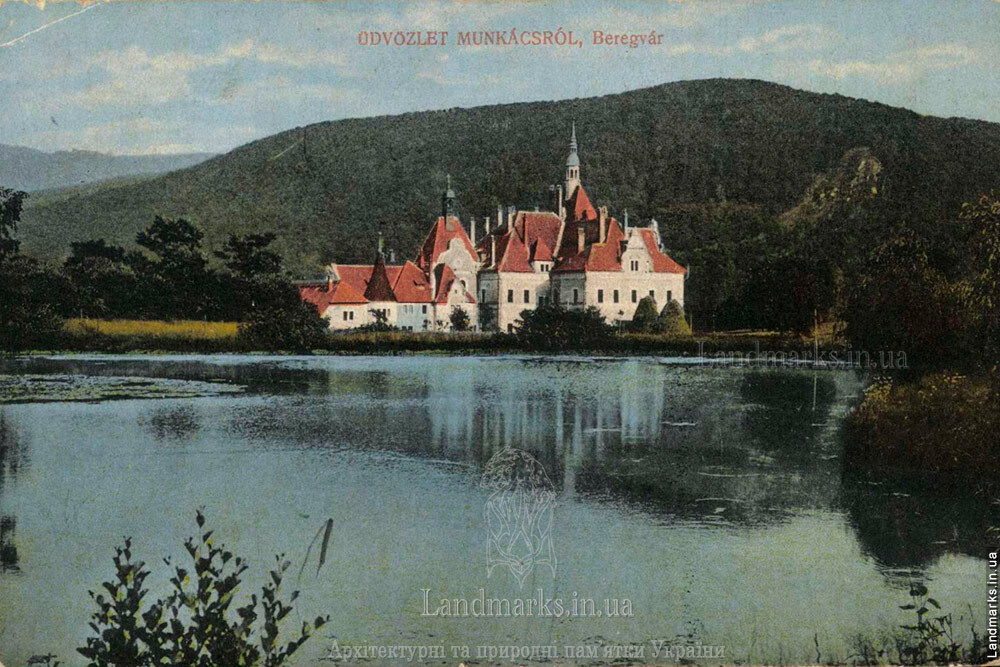
The palace has survived to this day in almost its original form. Its original red figured tiles deserve special attention.
The number of towers, chimneys, windows, and separate entrances are impressive. And this is not just for a reason.
Let's take a look at the Polish Malbork with its number of rooms equal to the number of days in a year, or some German castles where a tower corresponds to each month of the year. Similarly, Schönborn Castle resonates with the style of those ‘good old days of Romanism’.
It is said that the number of windows in the palace equals 365 days in a year, and 52 rooms coincides with the number of weeks in a year. There is an assumption that there are also so many chimneys in the palace. I don't know if this is true, but if you count from aerial photographs, there are at least three dozen for sure. The palace also has 12 entrances, the same number as the months of the year.
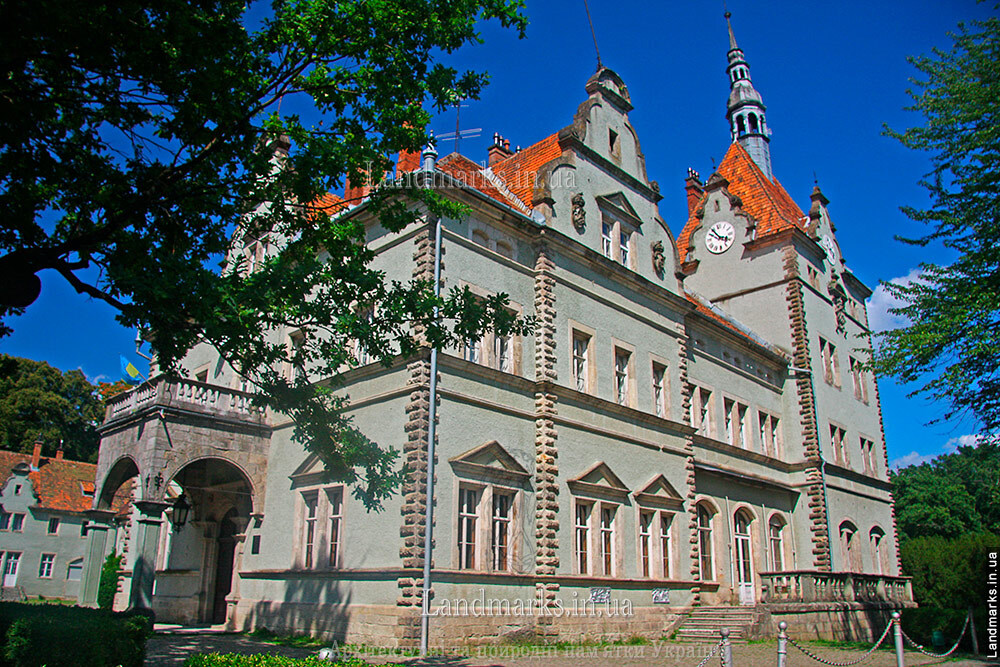
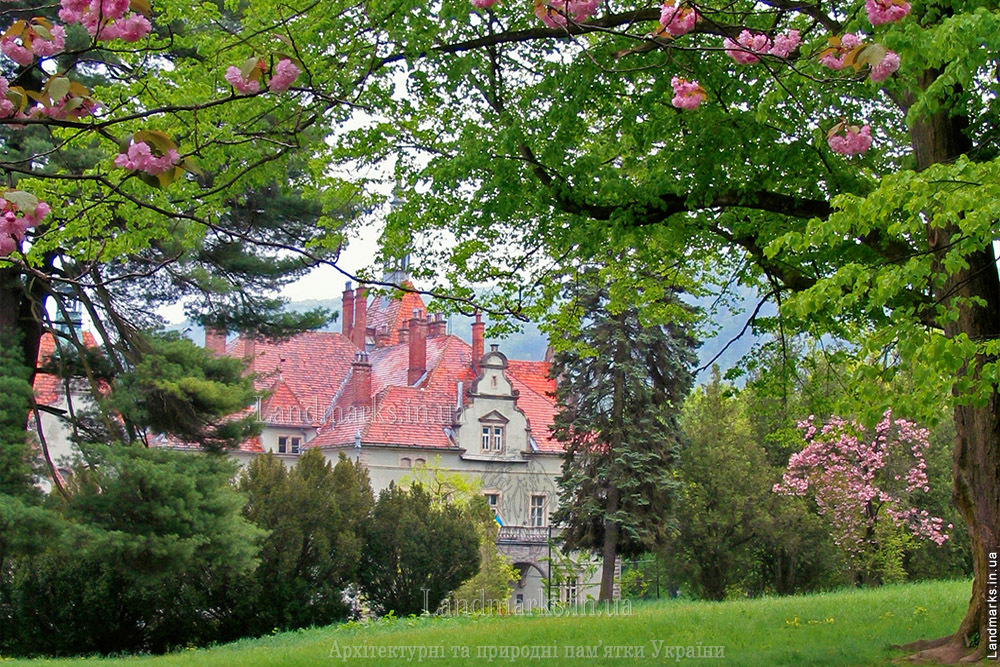
There is a park around the palace. It was created in 1848 as an English arboretum park with an area of 19 hectares. In the centre of the park, a decorative lake was arranged to recreate the outlines of the borders of the Austro-Hungarian Empire.
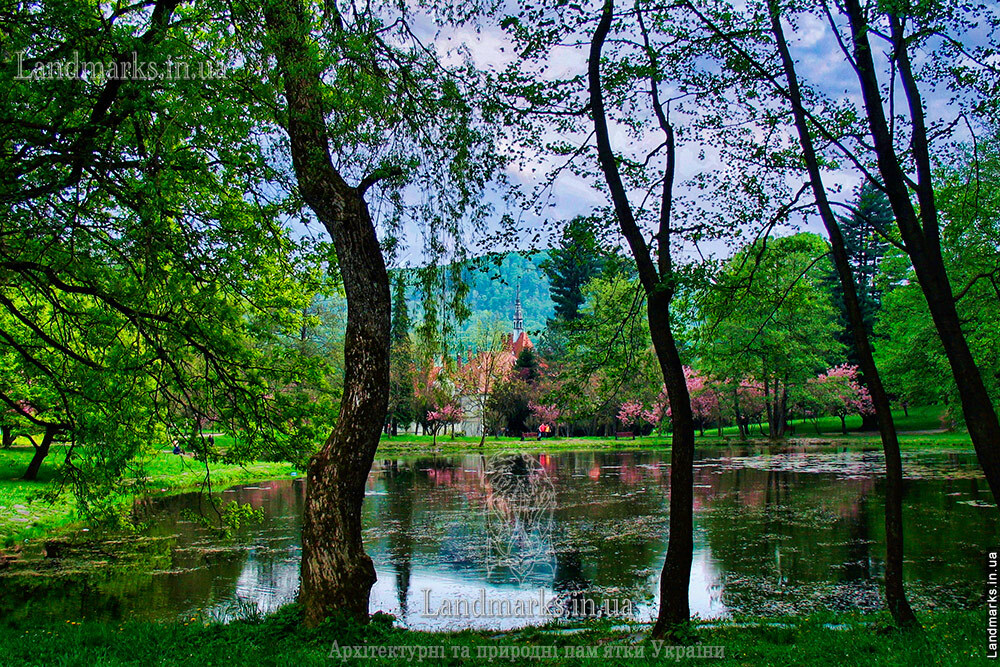
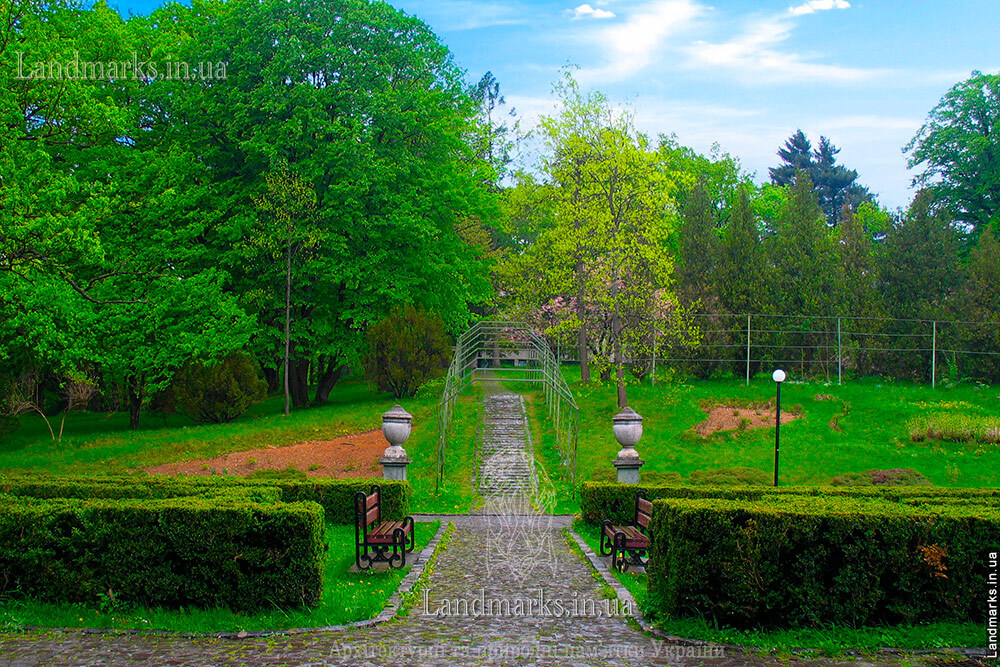
The park is still home to many rare species of plants: boxwood, catalpa, Weymouth pine, Canadian spruce, Japanese cherry, pink beech, Italian wisteria, silver maple, tulip tree, sakura and magnolia. In the park you can see stone sculptures of wild animals - a bear with cubs, a deer and new wooden figures. The park has a real menagerie with large enclosures for wild animals. The park also has a mineral water spring, which contains glycerin. Not far from the ‘Source of Beauty’ there is an arch with a vase decorated with a bas-relief of a girl, supposedly the count's niece. According to legend, the water helped her regain her former beauty after an illness.
It is especially beautiful here in spring and autumn, when everything is full of colours of the season. For example, sakuras and magnolias bloom in spring
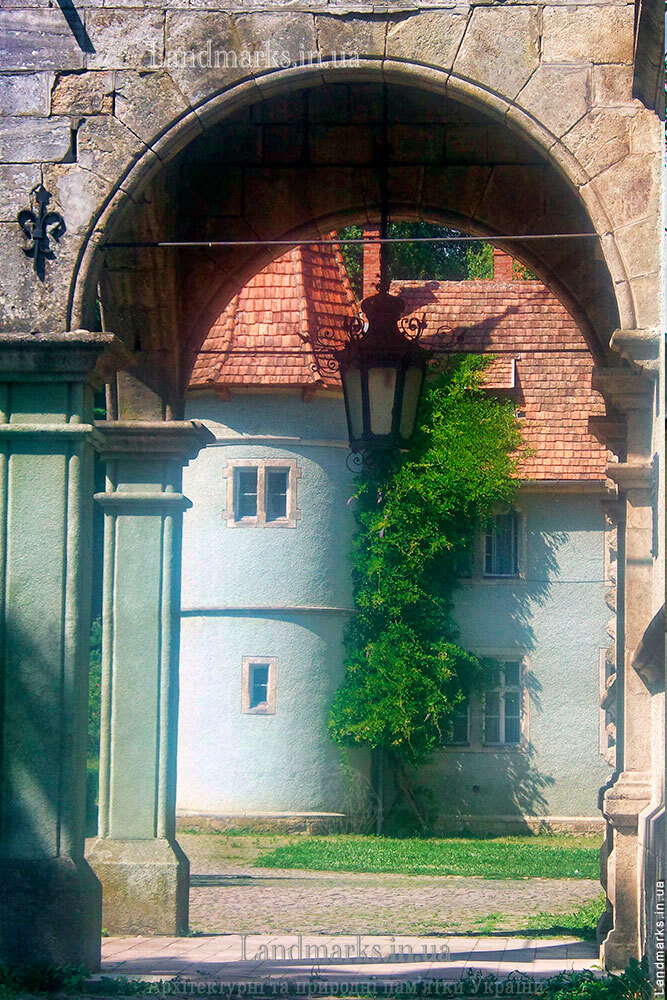
In 1945, the palace was nationalised. The sanatorium called Karpaty was opened in former palace. Some items from the palace's interior - furniture, paintings, other valuables, etc. - were then transferred to the Uzhhorod Museum of Local Lore.
Movies! Movies! Beregvar Palace appears in modern TV series, where it “played” the role of a French castle. I found information online that it was also featured in the films “The Snow Queen” and “Seventeen Moments of Spring.” It also served as the estate of the main character in the film “Coffee with Cardamom: The Power of the Earth.” But thanks to the filming of the TV show “The Traitors,” the castle has been given a new lease on life. The show’s crew first carried out a massive restoration and renovation of the building.
Another historical fact about the palace is worth noting...
Before World War II broke out, the castle caught the eye of Hermann Göring, the Reich Minister of Aviation in the Third Reich—the very man later described at the Nuremberg trials as a "charming villain" and a "real pirate." Under his command, peaceful cities were bombed. This henchman of Hitler had a tremendous passion for artworks, looting and claiming them for himself. Back in the late 1930s, he offered a vast sum of money to the then-President of Carpatho-Ukraine, Avhustyn Voloshyn, for this architectural gem in the Carpathians! President Voloshyn refused the Nazi minister, so Count Georg Erwin von Schönborn remained the owner. However, before the war ended in 1944, the count left his residence forever and relocated to Austria.
Yet, memories of the house where he spent his youth never left him. Before his death, he asked his wife, Christiane von Schönborn-Buchheim, to visit the Carpathian lands and provide financial assistance if needed. The Countess fulfilled her husband's last request and was named an "Honorary Citizen of Mukachevo." She provided funds for the palace's restoration, assisted local residents with a water supply project, and donated money for medications and equipment for the children's hospital.
So, what about the architect behind the palace project? A man named Gresserson is mentioned in the Soviet multi-volume reference book Monuments of Urban Planning and Architecture of the Ukrainian SSR. For some reason, the surname Gresserson appears online exclusively in connection with the Schönborn Palace, making it difficult to find any of his other creations—whether projects or completed works. (At least, I haven't been able to find a single other one.) It even raised a question for me: "Did such a person actually exist at all?" How could an architect design such a masterpiece, yet leave no trace of any other work?
On the other hand, a similar-sounding name pops up: Gregerson. Curious to trace this path, here is what I found. Gregerson was a 19th-century Hungarian contracting firm founded by the Norwegian carpenter Gudbrand(!) Gregersen de Saág. It was truly a family business, as Gudbrand’s brothers moved from their homeland to join him in Hungary. Their first project was a bridge over the Tisza River, and over time, they were involved in the reconstruction of Matthias Church in Budapest. When construction began on the Schönborn Palace, Gudbrand was 66 years old, making it reasonable to assume that his firm handled certain construction and structural engineering works for Beregvár Castle.
However, Gudbrand Gregersen was not an architect; he was a carpenter and engineer. Architecturally and visually, none of his works resemble this hunting lodge. His firm focused on designing and constructing more engineering-heavy and industrial structures—bridges, railways—though they did work on some public buildings as well. Gudbrand Gregersen was also actively involved in flood prevention efforts in Szeged and the construction of dikes.
Additionally, on a local history website, I came across a mention asserting that the architect was... Ferenc Basinda, who is referenced by Dmytro and Ivan Pop in the book Castles of Subcarpathian Rus, and who allegedly owned the castle and laid out a park near St. Miklós Castle back in... 1749. This is sheer absurdity.
Thus, the question regarding the true architect of the Schönborn Palace remains open. Do you have anything to add, know more details, or have interesting theories? Write in!
Photos and text by Landmarks.in.ua
If you notice that the information on this page is inaccurate or incomplete, it means you know more than we do. Please help by sharing your knowledge. Send an email with corrections, remarks, or interesting facts about this location to: landmarks.in.ua@ukr.net. If you spot spelling errors or typos, feel free to write as well—I will fix them.
Also, a friendly reminder: please respect my work. Kindly do not steal either the photos or the texts.